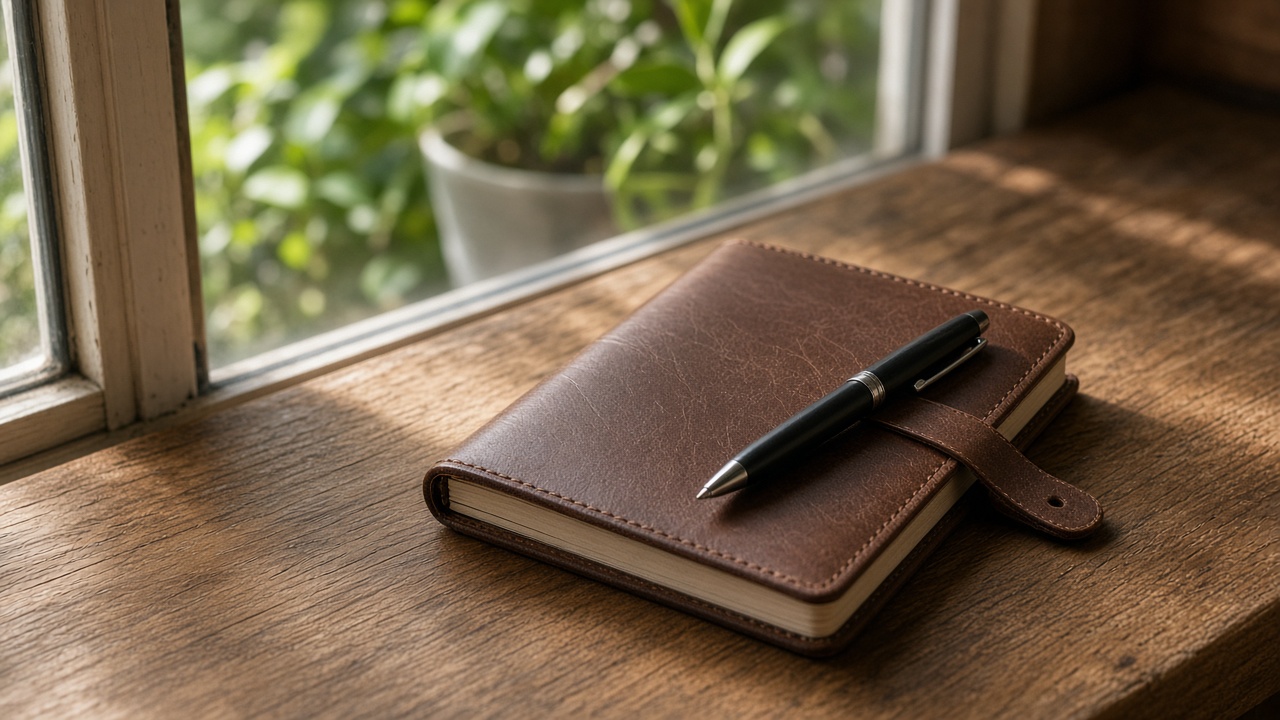
How we choose notebooks for our stationery range
When we review a new notebook for the range, we start with the same question every time: does this still feel right after a full day of notes, after switching between pen types, after the cover has been opened and closed a hundred times? That means checking paper weight, ruling, binding, and cover quality before a notebook earns shelf space.
A good range usually leans on one clear anchor — a dot-grid journal for creative work, a ruled notebook for study or office use, or a plain sketchbook we rotate seasonally — so the selection stays coherent instead of shifting with every new supplier.
If a notebook feels different and nobody in the shop can say why, we have not finished evaluating it. Every choice should trace back to a paper grade, a binding method, or a cover material we are willing to name.
We also balance formats and sizes so the range does not read like a single category. A smaller pocket journal might lean on portability; a larger hardcover might lean on durability and lay-flat binding. The selection stays consistent so returning customers can find the same quality visit after visit.

What we skip on purpose
We do not add flashy covers to hide a weak paper stock or carry a notebook that bleeds through with common pen types. If a batch does not hold up, we note it and remove it from the shelves. The aim is a range people can trust day after day — not a surprise on a Monday morning.

3 Comments
Lerato Molefe
The note on paper weight helped. I finally understood why my usual pen writes differently in some notebooks.
Amira Patel
Agreed on naming the paper grade. Nothing frustrates me faster than a range change with no explanation on the shelf label.
James van der Berg
Keeping this for my next visit. Good stationery ranges take more curation than people think — nice to see the selection notes written down.